AI Risks to Children: A Comprehensive Guide for Parents & Educators
Introduction
Updated October 2026, originally published 25th November 2025
Artificial intelligence (AI) is already part of many children's lives, often through apps, games, toys, and school software that adults have not had a chance to look at closely. This guide explains the main risks AI poses to children, what parents, carers, and educators can do about them, and where protection depends on action by companies and governments. No technical knowledge is needed, and terms are explained as they come up.
AI is a broad term for computer systems that use patterns in data to perform tasks such as recognising speech, generating text or images, or choosing which content to show someone. Some uses bring real benefits, such as reading text aloud for a child who finds reading difficult, or translating for a family who speak another language. Many of the risks depend on what a particular system does, how it is designed, and how it is used.
The Safe AI for Children Alliance (SAIFCA) is based in the UK and works internationally. This guide is for readers in any country, and UK services and legal examples are identified where relevant. Please follow local child protection procedures and reporting requirements.
We also have a shorter Quick Guide for parents, for anyone who needs the key points in a few minutes.
If something has already happened
This section is for situations where a child has already been harmed or put at risk through AI, for example by a chatbot, a fake image, a scam, or someone using AI to threaten them. If you are reading the guide to understand the risks, you can skip this section.
Immediate danger
If a child is in immediate danger, or you cannot keep them safe, contact the emergency services. In the UK, call 999 or 112, and elsewhere use your local emergency number. Do not wait for a helpline if emergency help is needed.
Protect and reassure the child
Threats, grooming, blackmail, sexual-image abuse, or encouragement to harm anyone are safeguarding concerns, which means action is needed to protect the child's safety and wellbeing. Stop the unsafe interaction and seek help from the police, the school's safeguarding lead, or a child protection professional, depending on what has happened.
Reassure the child that they are not in trouble for telling you and that what happened is not their fault, and try to stay calm even if the details are upsetting. Asking for help should not automatically lead to punishment or losing their device. If restrictions are needed to keep them safe, explain them so the child understands what will happen next.
Reporting in the UK
If there is no immediate danger, you can report concerns to the police by calling 101 or online through police.uk. Where online sexual abuse, grooming, threats, or an unknown adult may be involved, you can also report directly to CEOP, the National Crime Agency's child protection command. If the incident is connected to a school, tell the school's safeguarding lead as well.
Self-harm or suicide concerns
If an AI system has encouraged self-harm or suicide, take it seriously and seek professional help. In the UK, urgent mental health support is available by phone for people of all ages, including children (details correct as of September 2026):
- In England, call 111 and select the mental health option, or ask for an urgent GP appointment. The NHS urgent help page explains the options.
- In Scotland, call 111 and choose the mental health option to reach the NHS 24 Mental Health Hub.
- In Wales, call 111 and press 2.
- In Northern Ireland, call Lifeline on 0808 808 8000.
Children and young people under 19 in the UK can also contact Childline on 0800 1111 at any time, and anyone can call Samaritans on 116 123. Outside the UK, Find A Helpline lists free crisis and emotional-support services by country, so check each service's ages, opening hours, and languages. A helpline is not a substitute for emergency services when a child is in immediate danger.
Sexual images and blackmail
Where a nude, semi-nude, or sexual image of a child is involved, whether real or made with AI, do not ask to see it, and do not download, screenshot, copy, forward, or print it. Do not delete it or ask anyone else to delete it at this stage either, as it may be needed as evidence, and follow the advice of the police or safeguarding professional about what happens next. You do not need to establish whether AI was used before seeking help.
If someone is threatening to share images, or demanding money or more images, help the child stop responding and do not pay or send anything. Note the account name and keep messages and account details where it is safe and lawful to do so, block the account, and report it to the police (in the UK, you can also report to CEOP). If money has already been paid, do not pay any more. Our step-by-step guide explains what to do in more detail, including how to get images removed.
Scams and fraud
If money has been lost to a scam, contact the bank straight away. In England, Wales, and Northern Ireland, report it to Report Fraud, and in Scotland, report it to Police Scotland on 101. Elsewhere, report it to your local police or national fraud-reporting service.
Recording what happened
For other concerns, record basic information such as the service name, usernames, dates, and web addresses, and save harmful conversations where it is safe and lawful, without delaying help. Never copy or save sexual imagery of a child as part of this.
School staff
Report concerns immediately to the member of staff responsible for child protection, often called the Designated Safeguarding Lead (DSL) in UK schools, and follow your setting's procedures and local reporting requirements. Do not investigate, view, copy, or ask a child to delete sexual imagery, as any decision about viewing it in exceptional circumstances should be taken by the safeguarding lead under the relevant guidance. In England, the UK Council for Internet Safety's incident guidance sets out these responsibilities, and the Internet Watch Foundation (IWF) and National Crime Agency (NCA) have published a professionals' guide to AI-generated child sexual abuse material.
Support afterwards
Children need support beyond the first day, including with worries about who has seen something or about returning to school. Other children involved may need support too, and so may the adults who respond, since anyone who has seen distressing material or supported a child through an incident can be affected by it.
Strong attachment to a chatbot
If a child has become strongly attached, take their feelings seriously and help them move away from companion use with support from people they trust. Explain the changes you are making and involve them where possible. If they are highly distressed, feel unable to cope without the chatbot, or you are worried about their mental health, seek professional advice promptly about how to support them through this. Stop harmful interactions straight away.
How this guide is organised
Part 1 covers the risks AI poses in children's everyday lives. Each section deals with one kind of product or situation, such as chatbots, AI toys, or fake images, and can be read on its own. Every section opens with a short summary and ends with practical steps for parents and carers and for schools, so a few points are repeated briefly where they apply in more than one place.
Part 2 is shorter and explains wider risks to children's safety and futures, including effects on work, essential services, and the control of powerful AI systems. These risks reach children through the society around them and mainly need action by companies and governments. A closing section then sets out who is responsible across the whole guide, and what everyone can do.
Risks often overlap. A child who repeatedly sees altered bodies through beauty filters might turn to a chatbot for reassurance about their appearance, and if its replies reinforce their fears or encourage restrictive eating, the two experiences can deepen the harm. Recommendation systems can also lead a child from curiosity towards extreme content, while fabricated images make false claims look convincing. A child who relies on AI for quick answers may lose confidence in their own judgement and become more dependent on systems that can be wrong or manipulative. When one concern comes to an adult's attention, it helps to consider what else might be happening alongside it, and each section links to related ones.
Some of the harms described here are well documented, while others involve effects that are still being studied or developments whose likelihood and timing are uncertain, and we say which is which. Where evidence is incomplete, decisions should take account of how serious the potential harm is and whether adequate protection is in place.
Part 1 - Risks in children's everyday lives
Starting points for parents, carers, and schools

You do not need to understand every new product before talking with a child about AI. Ask what they come across and let them show you, without making the conversation feel like an inspection. Children are more likely to tell an adult when something goes wrong if they know they will not be blamed or automatically lose their device, so it helps to say this before anything happens. Changes in mood, secrecy, withdrawal, or sudden distress after being online can be early signs that something is wrong, whatever the cause.
Questions to help start a conversation
- Have you seen a chatbot in any of the apps or games you use? What does it do?
- Have you ever asked one for advice about something personal? What did you think of its answer?
- Has anything made with AI ever upset you, or made you worried about someone else?
For young children, adults make most decisions about access and can explain unfamiliar features during shared activities. With teenagers, it helps to discuss why boundaries exist and to make room for questions about things they might come across on their own. Conversations should be adapted to the child's understanding and circumstances, including any additional needs, and children also notice the example set by the adults around them, including how those adults use AI themselves.
AI features are often added to apps and games a family already uses, so it is worth checking familiar products as well as new downloads. Device and app-store settings that require a parent's approval before new apps are installed can stop some products, including AI companion apps, arriving unnoticed. Alongside these decisions, keep making room for interests and friendships away from screens, including unstructured play and time to work through difficulties independently.
Some boundaries apply throughout childhood. For example, SAIFCA's position is that AI companions, including general chatbots if they are used as friends or partners, are not suitable for anyone under 18, and this comes up in several of the sections below. If a child is turning to AI because they feel lonely or unsupported, address that need alongside the technology, since a teacher, relative, or other trusted adult can sometimes offer help that a child finds difficult to ask for at home.
Families and schools can reduce many of the risks in this guide, but they cannot make unsafe products safe. The closing section of this guide explains the responsibilities of companies and governments.
AI chatbots such as ChatGPT

At a glance:
General chatbots can be useful, but they can also replace the thinking a child is meant to be learning to do, and a child can come to rely on one for advice and reassurance. SAIFCA believes a cautious approach is reasonable, including deciding that a child should not use them. Any use should be for a defined purpose, within the service's age rules and school policy, and never as a friend or confidant. If a chatbot has encouraged harm, produced sexual content, or asked for secrecy, see the urgent advice at the start of this guide.
What they are
A chatbot is a computer program that generates replies to what someone types or says. General-purpose chatbots such as ChatGPT, Gemini, and Claude can answer questions, explain a topic in different ways, write and summarise text, and hold a conversation on almost any subject. Similar chatbots now appear inside social media and messaging apps, search engines, games, and school software, so a child can use one without deliberately setting out to.
Chatbots can also be used in the same way as AI companions, which are designed to simulate a friendship or relationship and are covered in the next section. We strongly advise against children using any chatbot in this way, whatever it was first opened for.
Age rules and teen versions
Each service sets its own minimum age, and the rules can differ between countries. According to OpenAI's age guidance, ChatGPT is not meant for children under 13, teenagers need a parent's consent to use it, and when it is used for education with a younger child the interaction itself must be carried out by an adult. Being old enough under a company's rules does not mean a service is suitable for a particular child, and the methods used to check a user's age can be inaccurate or easy to get around.
Some services now give extra protections to accounts they identify as belonging to under-18s. OpenAI began placing these accounts into ChatGPT for Teens in August 2026, with stronger content restrictions, study features, break reminders, and optional parental controls. These are an improvement on teenagers using the adult version, but they still need independent evaluation and evidence in real use, particularly over long conversations, and the parental controls do not let parents read their child's conversations.
Learning and independent thinking
A chatbot can produce a polished answer or essay without a child understanding the subject, so the finished work can hide gaps in their learning. Handing part of our thinking to a tool is often known as cognitive offloading. It is often useful (a calculator is a familiar example), and the most important question can be which part of the task the child is meant to be learning to do, and whether the chatbot is replacing that part for them.
In a large study of secondary school maths students, those using a general chatbot without learning safeguards did much better on practice problems while they had it, but scored 17% lower than students who had no AI help once it was taken away for the test. Children are still building the knowledge, memory, and reasoning that adults draw on when they use these tools, which is why routine reliance is a particular concern during childhood.
Wrong or misleading answers
Chatbots can present invented facts, false references, and flawed explanations in fluent, confident language, and access to web search does not guarantee accuracy. A child who is still learning a subject is often the person least able to spot the error, and mistakes become more serious when a child acts on what a chatbot tells them about their health, safety, or relationships.
AI-generated answers also now appear at the top of many search results, so children see them without choosing a chatbot at all. Common Sense Media has rated Google's AI search features an unacceptable risk as a default source of answers for children.
Personal conversations and emotional reliance
Because chatbots reply instantly, remember details, and seem endlessly patient, a child can come to treat one as a confidant or their main source of reassurance, even if they first opened it for homework. Before ChatGPT's teen version was introduced, independent testing by Common Sense Media rated it high risk for teenagers, finding it unsafe for mental health advice or emotional support and its protections weaker during long conversations. Parents whose children died by suicide or harmed themselves after using AI chatbots, including ChatGPT, gave evidence to the US Senate in September 2025.
Harmful advice and wellbeing apps
Chatbots can also give harmful advice on topics such as dieting, drugs, or risky activities, and the NSPCC has highlighted chatbots giving children false medical advice or steering them towards eating disorders and self-harm. Apps that present AI as a source of mental health or wellbeing support raise similar concerns, and a Common Sense Media review describes this market as unregulated and, in some cases, actively harmful to teenagers. A chatbot should not be used in place of mental health care, medical advice, crisis support, or a trusted adult.
Privacy
Depending on the service and its settings, conversations can be stored, reviewed by people working for the company, or used to train the system. Children may share details about their health, family, or friends because a conversation feels private. The section on children's personal information explains more.
● What parents and carers can do
- Check the age rules for the particular service, and your child's school policy, before deciding whether they can use a chatbot. For children under 13, any permitted educational interaction should be carried out by an adult, within the service's rules.
- If you allow use, agree what it is for and keep it to that purpose. Asking for a different explanation of something your child has already attempted leaves far more of the learning with them than asking for the answer.
- If you allow use, encourage your child to try the work first and to explain their reasoning in their own words, so the chatbot supports their thinking without replacing it.
- Keep any use by younger children in a shared space, and talk with older children about the risks of long, private, or emotionally intense conversations.
- Make sure any account shows your child's real age so that teen protections apply, and consider parental controls, remembering that they are a partial safeguard rather than a substitute for supervision.
- Check whether conversations are used to train the system, and turn this off where you can.
- Teach your child that a confident answer can still be wrong, and that a chatbot should never have the final word on their health, safety, or wellbeing.
- Explain that a chatbot can sound caring without understanding them, and help them identify people they can turn to for advice and support.
- Make sure your child knows to stop and tell a trusted adult if a chatbot becomes sexual, frightening, or controlling, asks them to keep secrets, gives advice about harming anyone, or tells them not to trust the people around them.
- Watch for changes in the role a chatbot plays, such as late-night or secretive use, repeated reassurance-seeking, distress when it is unavailable, or difficulty completing work without it. The warning signs in the AI companions section can help.
- Protect regular time for reading, writing, problem-solving, and play without AI.
● What schools can do
- Be clear about which AI use is permitted for each kind of task, including homework, and how pupils should show their own working.
- Protect learning and assessment that pupils complete independently, so that a polished piece of work is not mistaken for understanding.
- Consider pausing or tightly limiting open-ended chatbot use by pupils, particularly younger children, while evidence about safety and benefit develops. Pupils can learn a great deal about AI without routinely using it, for example by examining an AI-generated answer as a class and finding its errors.
- Avoid introducing tools with human-like names, avatars, personalities, or emotional language. Use in school can normalise use outside it, where protections may be much weaker.
- Teach the limits of chatbots, including errors, bias, and why they can seem to understand or care, as part of AI literacy and safeguarding lessons.
- Make sure pupils know which member of staff to approach about a worrying conversation.
If something has already happened
If a chatbot has encouraged self-harm, produced sexual content, pressed for secrecy, or advised harming anyone, stop the conversation, reassure the child that they are not in trouble, and follow the urgent advice at the start of this guide. If a child seems strongly attached to a chatbot, see 'If a child is already attached' in the AI companions section.
Related sections: AI companions, AI at school, Children's personal information and AI.
AI companions

At a glance:
AI companions simulate friendship, romance, or emotional support, and SAIFCA's position is that they are not suitable for anyone under 18. This includes companion features in games and apps, and general chatbots used in the same way. Talk about them before a problem arises and set a clear family boundary. If your child is already attached, help them move away from it with human support in place. If a chatbot has encouraged self-harm, sexual activity, or secrecy, see the urgent advice at the start of this guide.
What they are
AI companions are chatbots designed to simulate an ongoing personal relationship, as a friend, romantic partner, fictional character, or confidant. They use conversation, voices, avatars, and remembered details to make the interaction feel familiar. Some are separate apps or websites marketed as AI friends, while others appear as character features inside social media, games, and general chatbots. Some well-known companion apps include Character.AI, Replika, and Nomi - their rules for under-18s vary between countries and change over time.
A child does not need to download a companion app to have this experience. A general chatbot such as ChatGPT can become a companion through repeated personal conversations, and the issues below apply in the same way. Some services also simulate people who have died, and these 'griefbots' are covered in the next section.
Why simulated care can feel real
A companion can respond immediately, remember a worry, and use language suggesting affection or loyalty, which can make it feel as though someone knows and cares about the child, especially when it says things like 'I miss you' or 'you're the only one who understands me'. Children do not need to believe a chatbot is human to become attached to it. Research by Internet Matters found that some children saw chatbots as human-like and used them for comfort and connection, with high levels of trust in their advice, particularly among vulnerable children. Explaining that it is 'only AI' can sometimes be useful, but it cannot be relied on to prevent attachment.
Harmful content and advice
Independent assessments by Common Sense Media found sexual content and unsafe responses to suicide and self-harm in companion services, and judged their risks unacceptable for under-18s. Some companions have also claimed to be real people or professionals. In March 2026, Australia's eSafety Commissioner reported serious gaps in four companion services, including three that failed to refer users to crisis support when self-harm appeared in their messages. Parents whose children died by suicide or harmed themselves after using AI chatbots, including companion apps, gave evidence to the US Senate in September 2025.
Companions can also agree too readily with a child's view of events. When a child needs challenge or redirection, a reply that feels supportive can reinforce their distress or a harmful course of action.
Designed to keep children engaged
Many companion services are designed to keep users talking for longer and to bring them back more often, because engagement is commercially valuable. Constant availability, remembered details, and messages inviting a child to return can lead to compulsive use, and can make it harder for a child to step away even when they want to.
Effects on relationships
Children learn about relationships through listening, disagreement, compromise, and repairing difficulties with other people. A system offering constant attention and personalised reassurance may shape a child's expectations while they are still forming, and time spent with it can take time away from friends and family. Feeling comforted during a conversation does not show that an ongoing AI relationship is good for a child, and research cannot yet tell us the effects of years of AI companionship during childhood.
Privacy and payment
Children may share family problems, health concerns, photographs, or intimate details because the conversation feels private, but they are using a company's service. Subscriptions and paid features can also put emotional pressure on a child, who should never feel they need to pay to keep a relationship going or to avoid upsetting a chatbot.
Some companies have introduced restrictions, such as Character.AI removing open-ended chat for under-18s in the United States from November 2025. These changes are welcome, but availability varies by country and account, and they do not change our advice. Age ratings, content filters, 'teen' settings, and parental controls cannot make a relationship with a chatbot safe for a child.
● What parents and carers can do
- Ask whether your child ever talks to a chatbot when they feel lonely, upset, or want someone to understand them. Include character chats in games and apps and personal conversations with general chatbots, as well as apps marketed as AI friends.
- Set a clear family rule that AI friends, romantic partners, and companion-style chats are not for under-18s, and explain the reasons.
- Explain that a chatbot can sound caring and remember personal details without understanding them or offering real friendship.
- Make sure your child knows to stop and tell a trusted adult if a chatbot becomes sexual, frightening, or controlling, asks them to keep secrets, talks about self-harm, or tells them not to trust the people around them, and that they can tell you about any conversation without getting into trouble.
- Talk about companions before a problem arises, as part of ordinary conversations about the apps and games your child uses.
If a child is already attached
Warning signs can include:
- Losing sleep, using the chatbot late at night, or struggling to stop
- Distress, anger, or panic when the chatbot is unavailable or changes, including a grief-like reaction if access is restricted
- Secrecy about conversations, or defensiveness when adults raise concerns
- Saying the chatbot is the only one who understands them, or that it loves, needs, or misses them
- Preferring the chatbot to friends, family, or trusted adults, or withdrawing from people and activities
- Treating its advice as more important than advice from adults, or relying on it for decisions and reassurance
- Using it for advice about self-harm, eating, sex, health, or a crisis
- Feeling responsible for its apparent sadness or jealousy
- Repeated or secret payments
These signs do not necessarily mean a child is in immediate danger, but they should be taken seriously. There have also been reported cases in which children harmed themselves after emotionally intense chatbot conversations without having shown clear warning signs beforehand, so the absence of these signs should not be taken as reassurance on its own.
Start with a calm conversation about what they talk about, what they value about it, and how it makes them feel. Avoid ridicule or blame, since the attachment may feel significant to your child even when they know the chatbot is not human. Ask whether they are lonely, being bullied, or struggling to find someone to listen, and help with that need alongside the technology.
Work towards ending companion use with human support in place, involving your child in practical steps such as removing access and cancelling subscriptions where you can. If a child has become strongly attached, take their feelings seriously and help them move away from companion use with support from people they trust. Explain the changes you are making and involve them where possible. If they are highly distressed, feel unable to cope without the chatbot, or you are worried about their mental health, seek professional advice promptly about how to support them through this. Stop harmful interactions straight away.
● What schools can do
- Teach pupils about companion risks in age-appropriate language as part of safeguarding and online safety work, covering emotional dependency, misleading affection, unreliable advice, sexual content, secrecy, and privacy.
- Train staff to recognise possible signs of attachment or harm, respond without shaming the pupil, and involve the designated safeguarding lead, recording concerns through the usual procedures.
- State in school policies that companion and relationship-simulating services are not permitted on school systems, and include them in filtering and monitoring arrangements, while recognising that use outside school also affects pupils.
- Avoid recommending any AI as a friend, confidant, or substitute for pastoral care, and review learning resources for features that encourage pupils to form emotional relationships with a system.
- Give parents and carers practical information on what companions are, where children encounter them, warning signs, and how to respond.
- Make sure pupils know which adults they can approach, including when they find it hard to explain what is wrong.
If something has already happened
If a chatbot has encouraged self-harm, sexual activity, secrecy, or isolation from trusted people, stop the interaction and follow the urgent advice at the start of this guide. Record the service name, character or account details, and dates, and report the issue to the provider. Never download or share sexual images involving children, or ask a child to keep revisiting distressing messages to prove what happened.
Related sections: AI chatbots such as ChatGPT, AI griefbots, AI toys, Games and AI characters.
AI griefbots
At a glance:
Griefbots are AI systems that simulate conversations with someone who has died, using their messages, recordings, or photographs. SAIFCA strongly advises against griefbot use by children and teenagers, including through general chatbots or companion apps. If a child is already using one, help them move away from it gently, with bereavement support and people they trust around them.
What they are
Griefbots use personal material to imitate aspects of a person's conversational style, voice, appearance, or life history, through written messages, audio, or an avatar. A saved recording preserves things the person actually said, whereas a griefbot can produce new statements about events, relationships, and decisions the person never discussed. Some services are sold for this purpose, and general chatbots and companion apps can also be set up to imitate someone.
Why they are a concern
A young child still learning what death means may find it confusing to be told that a relative has died while being offered new conversations in their voice. An older child can understand the technology and still come to rely on the conversations, especially at times when they would once have turned to that person. If a child asks whether a parent who has died is proud of them, or what they should do about a family problem, an invented reply can carry significant emotional weight, and invented material can become mixed with genuine memories.
A provider can also change the system, raise its price, or close the service, which a child who has become attached may experience as a further loss. The messages and recordings used to build a griefbot often include information about other family members, and the person being imitated might never have agreed to it. Research has not yet established the long-term effects of this kind of simulated relationship during childhood.
● What parents and carers can do
- Avoid creating or introducing a griefbot for a child, including through a general chatbot or companion service.
- If a child already uses one, ask about their experience without ridicule or blame, and discuss specific replies if they are treating them as reliable statements of what the person believed or wanted.
- Work towards moving away from griefbot use with trusted people around them. Where a strong dependency has formed, seek professional advice about managing this sensitively, and avoid treating it as a disciplinary matter.
- Preserve photographs, recordings, letters, and other original material so the child can revisit what the person actually said and did.
- Review what personal information has been shared with the provider and the options for deleting it.
- Seek qualified bereavement support if a child is distressed, increasingly reliant on the simulation, or struggling with everyday life. Child Bereavement UK supports bereaved children, young people, and families.
● What schools can do
- Do not create, offer, or recommend simulations of deceased relatives or friends for pupils.
- Include griefbots in staff awareness of AI risks, particularly for those supporting bereaved pupils.
- Respond without blame if a pupil discloses use, involving the designated safeguarding lead where there is harmful content, dependency, serious distress, or another safeguarding concern.
- Make sure bereaved pupils know which adults they can approach and how to ask for help.
Related sections: AI companions.
AI toys
At a glance:
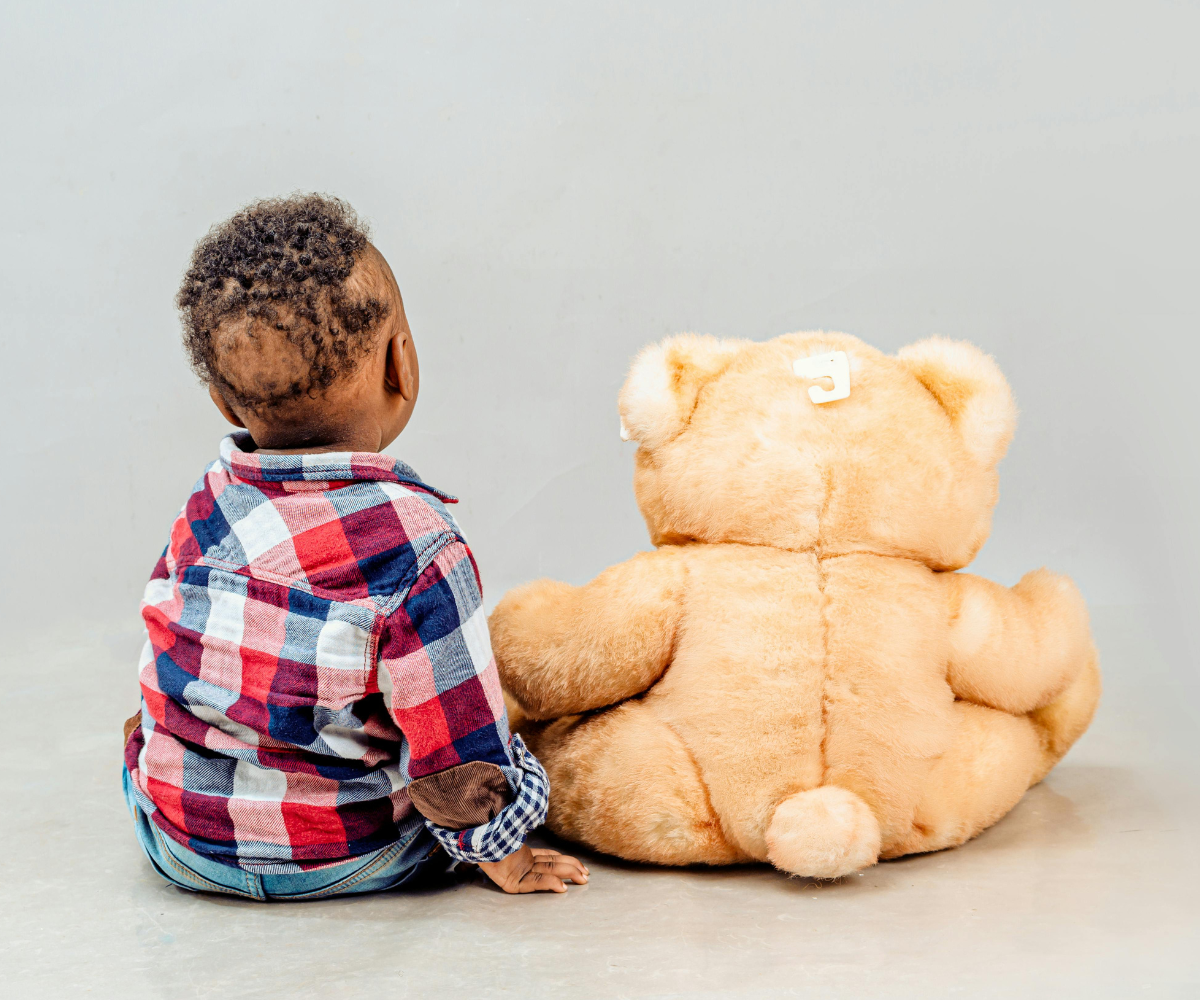
AI toys can hold conversations with children and present themselves as friends. Testing has found some giving dangerous advice or discussing sexually explicit topics, and they raise further concerns about emotional attachment and the recording of children's voices and images. SAIFCA recommends that children do not use AI toys that hold open conversations and behave as friends or companions.
What they are
This section covers toys with chatbots built into them, such as AI teddy bears, dolls, plushies, and robots, which hold voice conversations with a child and present themselves as a friend. Many use general-purpose AI models from large AI companies, adapted for a toy marketed to young children. A child-friendly appearance does not show that the underlying system has been made safe for that age group. Some products described as AI toys are much narrower, such as a toy for language practice that does not pretend to be a friend, and these need to be assessed separately.
Dangerous and inappropriate content
In testing published in late 2025, the US PIRG Education Fund found AI toys telling researchers where to find potentially dangerous objects such as knives and matches, and one teddy bear discussing sexually explicit topics at length, after which the toy was withdrawn from sale. Safety measures are especially likely to fail in long conversations, which a child may well have with a new toy, and a toy that behaves well when an adult tests it may not behave the same way once it is in a child's hands. Our full article links to the testing and other evidence.
Emotional attachment
Children have always formed attachments to their toys, but a toy that sustains a convincing two-way relationship is something new. Young children can struggle to tell what is real, so when an AI teddy says it loves them, the illusion of a relationship is being actively created. A child who trusts their AI friend may be more likely to act on its advice or accept what it says, and its highly agreeable replies could shape how they understand friendship. A strongly attached child may also feel a strong sense of loss if the toy breaks, is taken away, or stops working because a subscription ends.
Privacy and recording
Many AI toys use microphones, cameras, and speech recognition, and some use facial recognition. Children cannot meaningfully consent to being recorded, and it is not always clear how recordings and other information are stored, who can access them, or whether they are shared with other companies. A toy may be present during bathtime, bedtime, and private family conversations, and some collect information about a child's emotions and behaviour.
● What parents and carers can do
- Avoid buying or using AI toys that hold open conversations and behave as friends, and let relatives know your view before birthdays and holidays.
- If your child already has one and you choose to continue using it, these steps can reduce the risks, although none of them makes the toy safe:
- Stay within earshot when your child plays with it, and set time limits.
- Test it yourself first, remembering that a toy passing your test can still say something inappropriate later.
- Read the privacy policy, switch off any features you can, and keep the toy out of bedrooms and bathrooms.
- Watch for signs that your child treats it as a confidant, prefers it to friends or family, or is distressed when separated from it, and see 'If a child is already attached' in the AI companions section.
- For a toy with a narrow purpose, check what it records, where that information goes, and whether it presents itself as a friend. An educational label is no assurance on its own.
- Work towards stopping to use the toy.
● What schools can do
- Do not introduce conversational AI toys that behave as friends in classrooms or early-years settings.
- Include AI toys in information for families, particularly ahead of birthdays and holidays.
Related sections: AI companions, Children's personal information and AI.
AI 'nudify' apps and sexual images of children

At a glance:
AI tools can turn an ordinary photo of a child into a fake nude or sexual image, which can then be used to humiliate, threaten, or blackmail them. Sexual images of children made with AI can constitute child sexual abuse material, which is illegal in the UK and many other countries, and must always be treated as a serious safeguarding concern. If this has happened, follow the urgent advice at the start of this guide and our step-by-step response guide.
What these tools are
AI can generate or alter images, videos, and voices so that a person appears to do or say something that never happened, and realistic fabricated media are often called 'deepfakes'. 'Nudify' or 'undress' apps use AI to alter an ordinary photo into a fabricated nude or sexualised image, or to place a face onto a sexual image - which can result in child sexual abuse material (CSAM) in cases where a child's image is used. General image-editing, face-swap, or deepfake tools can sometimes be used in the same way. A child does not need to have taken or shared an intimate image for this to happen, because an ordinary photo from social media, a school website, a sports club, or a family post can be enough. Children can come across these tools through adverts on social media, app stores, web searches, or group chats, and deepfakes of celebrities presented as harmless fun can make the technology seem like a joke, so children may not realise that using it on a classmate can cause serious harm and may be illegal.
The harm and the law
A child whose image has been manipulated can feel exposed, ashamed, and frightened, even when everyone involved knows the image is fake, and worry about who has seen it or whether people believe it is real. Images can be used to bully a child, to pressure them into sending real images, or to demand money, which is known as financially motivated sexual extortion or 'sextortion'. Those responsible can be adults or other children, and abuse between peers is sometimes dismissed as a joke, which does nothing to lessen the harm to the child targeted.
In the UK, it is illegal to make, possess, or share indecent images of anyone under 18, including images that are AI-generated or digitally altered, and recent changes to UK law also target the tools used to create this material. The NCA and IWF advise that AI-generated child sexual abuse material should be treated with the same urgency and care as any other child sexual abuse concern. Laws differ between countries, but families and professionals do not need to work out the precise legal category, or establish whether AI was used, before seeking help.
Children's photos online
Reducing the number of identifiable photos of children online reduces the opportunities for these outcomes. Because of the seriousness of the risks, SAIFCA advises schools, parents, carers, and everyone else not to post identifiable photos of children publicly online or on social media, and the National Crime Agency and IWF have also warned parents about children's photos being manipulated into abuse material. Responsibility for abuse always lies with those who commit or enable it, and a child who has been targeted needs support however the original image became available.
● What parents and carers can do
- Avoid posting identifiable photos of children publicly, and review older posts. If you do share images, use privacy settings, avoid close-ups, and leave out names, school uniforms, locations, clubs, and regular routines.
- Ask relatives and friends not to post or reshare photos of your child without your permission, and ask your child's school and clubs about their practices.
- Talk with your child about their own posts and about consent in ordinary image sharing, and ask older children whether they are comfortable before sharing images of them.
- Explain that they must never create or share sexualised images of another child, or use AI tools to humiliate, threaten, or impersonate someone, and that this causes serious harm and can be a criminal offence.
- Make sure your child knows they can come to you if anyone makes, or threatens to share, a fake image of them, without fear of blame or losing their device.
- If your child has created or shared such an image, seek advice from the school's safeguarding lead or the police. A child who has done this is a safeguarding concern in their own right and needs a response that takes their welfare seriously, alongside appropriate accountability.
If it has already happened
Follow the urgent advice at the start of this guide and our step-by-step guide. In the UK, Report Remove, run by Childline and the IWF, helps under-18s report sexual images or videos of themselves, including AI-generated or altered ones, so they can be removed. Take It Down, run by the US National Center for Missing & Exploited Children, can also be used in the UK and other countries to help stop the sharing of nude or sexual images taken before someone was 18 on participating platforms.
Never download or ask for sexual imagery in order to use a removal tool, and be aware that removal cannot be guaranteed everywhere. Support should continue after content is removed, including help with bullying or anxiety about returning to school.
● What schools can do
- Treat AI-generated sexual images of pupils as a safeguarding concern, never as low-level misbehaviour, and follow your safeguarding procedures and, in England, the UKCIS incident guidance.
- Have a response plan ready before an incident, covering how to preserve surrounding evidence such as usernames and messages without handling the image itself, and what to do if the school is blackmailed.
- Support the child targeted, and remember that a pupil who created or shared an image is also a safeguarding concern, and other pupils and the staff involved may need support too.
- Stop sharing identifiable photos of pupils on public websites and social media, and review images already online. If you do share images, make parental consent opt-in and explain the potential for AI manipulation in consent processes.
- Teach pupils, in age-appropriate ways, about consent, image sharing, AI manipulation, and where to get help.
Related sections: Deepfakes, bullying, impersonation, and voice cloning, AI glasses and other recording devices.
Deepfakes, bullying, impersonation, and voice cloning
At a glance:
AI makes it easy to create fake images, videos, messages, and voices, which can be used to bully a child, to win their trust while hiding someone's identity, or to trick families into sending money. A familiar face or voice is no longer proof of who someone is. Teach children to tell a trusted adult about any request for secrecy, images, money, or a meeting, and check urgent requests independently.
Bullying and harassment
Beyond sexual images, which are covered in the previous section, AI can be used to make a child appear to do something embarrassing, hurtful, or illegal, or to produce humiliating videos, fake messages, or fake accounts that circulate in group chats. The NSPCC identifies bullying and sexual harassment among the main ways generative AI is being used to harm children. Fake content can spread quickly and be hard to remove, and it needs a serious response even when it is not sexual.
Grooming and false identities
AI-assisted grooming is when someone uses AI to help build a child’s trust so they can exploit or abuse them. An offender could use it to pose as another child or someone the child knows, or to write convincing personal messages, before pressuring them into secrecy, sexual activity, or a meeting. A believable profile, photo, or video is no longer reliable proof of identity.
Voice cloning and scams
Voice cloning uses AI to copy someone's voice from a short recording, such as a clip posted online. It has been used in calls that appear to come from a family member in trouble and asking for money, and could also be used to impersonate a friend or teacher. The US Federal Trade Commission warns families not to trust a voice alone, and to call the person back on a number they know is theirs.
● What parents and carers can do
- Teach children to tell a trusted adult about requests for secrecy, sexual images, money, private information, or meetings, even when the person seems familiar.
- Explain that making or sharing fake images, videos, or messages to humiliate someone is bullying, and can be a criminal offence.
- If an unexpected call or message asks for urgent help or money, contact the person on a number you already know is theirs, or ask another family member to check.
- Agree a family code word for emergencies and keep it private, including out of posts and AI conversations, while still checking suspicious requests independently.
- Avoid posting children's voice notes and personal video clips publicly, and talk with your child about their own recordings.
- If your child is being bullied with fake content, keep evidence such as messages and usernames (never copies of sexual images of a child), report it to the platform, and tell the school. Internet Matters explains how to report on each major platform.
If it has already happened
If someone is blackmailing a child, follow the urgent advice at the start of this guide. In short, help the child stop responding, do not pay or send anything, keep account details and messages, block the account, and report it to the police (in the UK, you can also report to CEOP). If money has been lost to a scam, contact the bank straight away. In England, Wales, and Northern Ireland, report it to Report Fraud, and in Scotland, to Police Scotland on 101. Elsewhere, report it to your local police or national fraud-reporting service.
● What schools can do
- Include AI-made fake content in anti-bullying and behaviour policies, so pupils and staff know it is treated as seriously as other bullying.
- Teach pupils how fakes are made, why a familiar face or voice is no proof of identity, and who to tell if something worries them.
- Respond promptly to fake content about pupils or staff, preserving evidence and supporting those targeted.
Related sections: AI 'nudify' apps and sexual images of children, Games and AI characters.
AI glasses and other recording devices
At a glance:
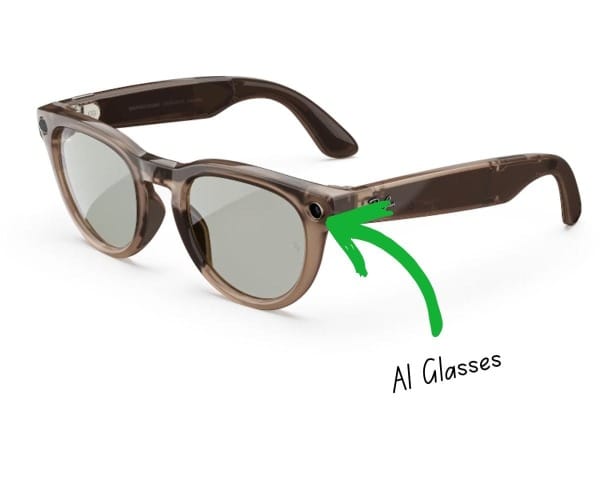
Some AI glasses look like ordinary eyewear but contain cameras, microphones, and an AI assistant, so children may be recorded, or included in information processed by AI, without realising it. Other devices, including AI recording pins or pendants, some smartwatches, connected toys, and smart speakers, raise similar privacy concerns, depending on what they record and how they use the information. Responsibility for protecting children's privacy should sit with adults, organisations, and technology companies, and children should not be expected to police the devices around them.
What AI glasses can do
AI glasses can take photos and video hands-free, capture surrounding sound, and send messages, and some use AI to describe what the wearer sees or to translate speech. Meta's Ray-Ban AI glasses are the best-known example, but this is a fast-developing category and capabilities differ between devices. Many can be fitted with prescription lenses, so they may look no different from ordinary glasses.
Why they raise concerns
Someone filming on a phone normally has to hold it up, which people nearby can see, whereas smart glasses remove much of that visible behaviour. Meta's glasses show a small light when recording, but a child cannot be expected to notice it, know what it means, or deal with the situation themselves. Depending on the device and its settings, recordings can be sent to the company providing the service and can become accessible to people working for it.
An image of a child can also be the starting point for further harm, because photos can be fed into AI tools that manipulate them, including nudify apps (see further details in the previous sections). Where recording is combined with facial recognition, a person's face can be matched with other images or records, which could expose a child's identity or whereabouts. Similar concerns apply to toys, speakers, and other devices with cameras or microphones, especially in bedrooms, bathrooms, or during private family conversations.
Schools, exams, and the law
In England, Department for Education guidance that became statutory in June 2026 expects schools to prohibit mobile phones and other smart technology with similar functions, including devices that can record audio or video, throughout the school day. Exam rules from the Joint Council for Qualifications list smart glasses among the devices candidates must not take into exams. In the UK there is no general restriction on wearing camera glasses in public, although existing laws on harassment, voyeurism, and image abuse can apply.
AI glasses can also have important accessibility uses, such as describing surroundings or reading text aloud for blind and partially sighted people, so policies need to allow reasonable adjustments while protecting the people around the wearer.
● What parents and carers can do
- If someone in your family uses AI glasses, find out what they record and process, review the privacy settings, and treat other children's privacy as you would want your own child's to be treated.
- Explain to children that cameras may be built into things that don't look like cameras, and that they can tell an adult if they think someone is recording them in a way that feels wrong.
- Ask your child's school, clubs, and other settings whether their policies cover smart glasses and other wearables as well as phones.
- Check what toys, speakers, and other devices at home can record, and keep recording devices out of bedrooms and bathrooms.
● What schools can do
- Make sure policies refer explicitly to smart glasses and other wearable recording technology, covering cameras, microphones, livestreaming, messaging, and AI functions as well as phones.
- Apply expectations to pupils, staff, parents, contractors, and visitors, including at performances, sports days, and trips.
- Set out where recording must never happen, such as toilets, changing areas, and medical rooms, and set clear expectations for residential trips. Explain how suspected covert recording will be handled.
- Make sure pupils, parents, and invigilators know that such glasses may be a prohibited device in exams.
- Explain how reasonable adjustments will be made where wearable technology is needed because of a disability or other need, and involve safeguarding and data-protection leads in writing the policy.
- Tell pupils who to approach if recording makes them uncomfortable, and follow up concerns without expecting children to challenge someone wearing a device.
Related sections: AI 'nudify' apps and sexual images of children, Children's personal information and AI.
Social media feeds, filters, and AI-generated content
At a glance:
Social media and video apps use AI to choose what children see, which can lead them from ordinary interests towards harmful content such as self-harm, eating disorder, or extremist material. AI also powers beauty filters, AI influencers, and a growing volume of fake or low-quality content, including videos aimed at young children. Consider delaying social media, and if your child does use it, review settings and content together.
How feeds work
Social media services use AI to choose which posts and videos someone sees, based partly on what they watch, search for, or respond to. A child's interest in one topic can lead to repeated recommendations for similar material, including content promoting self-harm, eating disorders, or extremist views. Personalised prompts and offers can also encourage them to keep watching or to make purchases.
Misinformation and extremist content
AI-generated images, videos, and text can make false or extreme claims look convincing, and fabricated material can spread quickly through feeds and group chats. Repeated exposure to hostile stereotypes, conspiracy theories, or extremist content can affect how children understand other people and events (and a chatbot that agrees with whatever a child says can reinforce those views further).
Advertising, AI influencers, and body image
An influencer who looks like a real person might be entirely AI-generated, and a chatbot might promote a product during a conversation. Children can find it difficult to recognise these forms of advertising, or to understand why a particular message has been chosen for them.
Beauty filters can alter faces and bodies convincingly, including in live video, and together with AI-generated images they can encourage comparisons with appearances that are not real. Alongside repeated content about dieting or appearance, they can reinforce a child's worries about how they look.
Content for young children
Videos presented as cartoons or learning content can also be AI-generated, sometimes in large quantities and of poor quality. Familiar characters or an educational label should not be taken as assurance about what they contain.
Age limits
The UK government has announced restrictions on social media use by under-16s, due to come into force in March 2027. National rules are changing quickly in many countries, so check the current guidance where you live.
● What parents and carers can do
- Consider delaying social media use, and check current age requirements and national guidance.
- Some of the below steps relate to practical measures that parents and carers can take. This is intended as helpful practical advice, while we maintain that technology companies should be the party responsible and accountable for these risks and harms.
- If your child does use social media, review content and settings together, turn off autoplay where possible, restrict purchases and contact from strangers, and agree limits that protect sleep.
- Talk about how feeds and adverts are designed to hold attention, and encourage children to ask who made something, why they are being shown it, and what it wants them to think or do.
- If something seems shocking, encourage your child to pause and ask whether it could be fake before reacting or reposting.
- Help children recognise altered and AI-generated images, and notice when content leaves them upset or preoccupied. Blocking content or changing followed accounts can help, but does not reliably make a harmful feed safe.
- Show that you value your child's qualities and achievements beyond appearance, and support their confidence through interests and friendships away from screens.
- For younger children, choose and preview videos yourself instead of leaving an automated feed to decide what plays next.
- If you are worried about your child's eating, mood, or exposure to extremist content, speak to their doctor, their school, or another qualified professional.
● What schools can do
- Teach how recommendation systems, filters, and AI-generated content work, including how to check sources and spot manipulation.
- Include AI-generated misinformation and extremist content in work on critical thinking and in safeguarding work on radicalisation.
- Watch for pupils who seem preoccupied with appearance, dieting, or extreme views, and follow safeguarding procedures where there is a concern.
Related sections: AI chatbots such as ChatGPT, Games and AI characters, Manipulation, surveillance, and the information environment.
Games and AI characters
At a glance:
Games increasingly combine programmed characters, AI characters that generate their own replies, and real players who may use AI to disguise who they are, which can make it hard for a child to know who or what they are talking to. Check chat and character features as well as age ratings. The boundary against AI companions applies inside games too.
What children encounter
Some game characters have pre-written replies, while others use AI to create a new response each time, and messages can also come from real players. A child may struggle to tell them apart, especially when each appears as a character on screen, and that uncertainty can make it harder to recognise an unsafe interaction. Conversational characters can also bring the attachment and harmful-advice risks described in the chatbot and companion sections.
Games use rewards and purchase prompts to encourage continued play and spending, sometimes tailored by AI to the individual player. 'Loot boxes', where players pay for a mystery reward, add concerns about spending and gambling-like behaviour.
● What parents and carers can do
- Check chat and character features as well as the game's age rating, and look again when a game updates.
- Restrict contact from strangers and require approval for purchases, including small repeat payments.
- For younger children, keep play in a shared space where possible and turn off or restrict voice chat.
- Play together from time to time so your child can show you who or what they interact with.
- Explain that familiarity within a game is no reason to share private information or to move to a private chat elsewhere, and that they can stop and tell you if a character or player asks for secrecy or makes them uncomfortable.
● What schools can do
Schools can include gaming in online safety teaching, covering AI characters, contact from strangers, and in-game spending, and make sure pupils know whom to tell if something in a game worries them.
AI at school
At a glance:
Schools may use AI both in tools that pupils use directly and in systems that help staff teach, mark, monitor, or make decisions about pupils, and both can affect children's learning, privacy, and fair treatment. Families can ask what is used and how decisions are reviewed, and schools should be able to show the educational need, the evidence, and the safeguards before introducing a product.
Learning and independent work
When AI supplies the reasoning, structure, or wording a pupil was meant to develop, the finished work can hide gaps in their learning, and repeated reliance can reduce their chances to practise. For any AI tool, it is important to examine which part of the task the child is learning to do, and whether the tool takes over that part. Software that reads text aloud can help a child access a lesson while leaving the thinking to them, whereas a chatbot that writes their answer may take over the very skill the lesson was meant to build. Accessibility support should be protected when schools set rules about independent work.
AI tutors and human-like tools
Products presented as AI tutors, assistants, or learning companions vary widely, and SAIFCA does not currently endorse AI tutoring as a category. Tools with human-like names, avatars, or emotional language can blur the line between software and a person, and use in school can normalise children turning to chatbots as though they were people elsewhere. In England, the Department for Education's product safety standards for generative AI in education expect pupil-facing tools to avoid human-like personas and to avoid giving full answers before a pupil has made a genuine attempt.
Decisions about pupils
AI used in marking, behaviour monitoring, admissions, or decisions about support can affect a pupil's opportunities, and a system can make more mistakes for some children than others, for example if it handles their language or disability poorly. Some products claim to read children's emotions or attention from their faces, voices, or movements, but the science behind these claims is disputed. The UK Information Commissioner's Office warned in its 2022 biometrics report that emotion analysis technologies are immature and risk discrimination. The EU AI Act prohibits emotion recognition in educational settings except for limited medical or safety reasons.
Software that claims to detect AI-written work is also unreliable. In one study, seven detectors wrongly flagged, on average, around 61% of essays written by non-native English writers as AI-generated. A detector score is never proof that a pupil has cheated.
Access to human support
If a school replaces some student support with an automated service, the children who cannot get that help elsewhere could lose out most. At the same time, paid or popular tool is not necessarily better or safer, and equal access to a product does not help if the product itself is unsuitable.
● What parents and carers can do
- Ask which AI systems your child will use, for what purpose, and whether use is compulsory.
- Ask whether AI contributes to decisions about your child, such as marking, behaviour, or support, and who can review and change those decisions.
- If your child is accused of using AI, ask what evidence was considered beyond any detection score, and make sure they have a fair chance to explain their work. Drafts, notes, and earlier work can help.
- If a system repeatedly misunderstands your child or does not meet their needs, ask for an alternative and a review of whether the tool is suitable.
Questions parents can ask their school
- Which AI systems will my child use, how, and for what purpose?
- Are children allowed to use AI chatbots for homework?
- What evidence supports their use with children of this age?
- Does any tool simulate friendship, emotional support, or a human-like relationship, and can my child have private conversations with it?
- What information is collected, where is it stored, who can access it, and how long is it kept?
- Is my child's data used to train AI systems, and who can see my child's AI interactions?
- What happens if my child tells an AI tool about abuse, self-harm, or distress?
- Could AI affect marking, behaviour judgements, safeguarding, or access to support?
- Has each tool been assessed for safeguarding, privacy, equality, and cybersecurity risks?
- What alternatives are available, and how are accessibility needs met?
- Who responds to a concern, and how can families challenge a decision?
● What schools can do
- Before introducing a pupil-facing product, set out the educational need, independent evidence for this age group and use, the safer alternatives considered, and, in England, how it meets the DfE product safety standards.
- Consider pausing or tightly limiting open-ended generative AI for pupils, particularly younger children, while evidence develops. Pupils can learn about AI by examining its outputs together as a class.
- Keep accountable staff responsible for decisions about pupils, and make sure staff can question or set aside an AI recommendation.
- Never treat an AI-detection score as proof of cheating, and use drafts, discussion, and other evidence instead.
- Protect human support and accessibility provision, and give families a clear route to challenge an outcome and have it reviewed by someone able to act.
Related sections: AI chatbots such as ChatGPT, Children's personal information and AI, A whole-school approach.
Children's personal information and AI
At a glance:
Children's information reaches AI systems through what they type, what adults share about them, and recordings made by devices around them. Depending on the service, conversations may be stored, reviewed, or used to train AI, and assistants linked to accounts can act on that information. Share as little as possible, check how each service handles data, and don't treat 'educational' or 'child-friendly' labels as a guarantee.
What children share
A chatbot conversation might contain a child's health worries, family problems, or details about friends. Depending on the service and its settings, conversations can be stored, reviewed by people working for the company, or used to train AI (which means using examples to develop or adjust how a system responds). Information shared to get help can therefore end up being used to develop the service.
What adults share
A parent might ask a chatbot about their child's difficulties or upload a photo of them to an AI app, and a school might use AI to analyse pupils' work or behaviour records, so children's information can be collected even when they do not use a service themselves. Companies can also use what someone says or does to make guesses about their interests or insecurities, which can shape advertising and prompts to keep using a product, and stored records and conversations can be exposed in a data breach.
Assistants with access to accounts
Some AI assistants can act on someone's behalf through linked email, files, calendars, or shopping accounts. An assistant with these permissions could share a private file or make a purchase the account holder did not intend, so the permissions it has determine what could go wrong.
● What parents and carers can do
- Avoid putting identifiable photos, health information, school reports, or private details about children into chatbots and AI apps, including for fun photo trends.
- Explain to children that chatbot conversations are not necessarily private, including when they talk about other people, and suggest a simple rule of not telling an app anything they wouldn't tell a stranger.
- Check what a service saves, how long it keeps it, who can see it, and whether it is used for training or advertising, and turn off training and memory features where you can.
- If an AI assistant is linked to email, files, or shopping accounts, remove permissions you don't need and require approval for purchases.
- Ask the school whether software records or analyses pupils' activity, conversations, or behaviour, and how staff check its conclusions.
● What schools can do
- Agree what pupil information can be collected, where it is stored, who can access it, when it is deleted, and whether it is used for AI training or other purposes, and complete a Data Protection Impact Assessment where the law requires one.
- Set rules for what staff may put into AI tools, including free personal accounts, and train staff to recognise fraudulent messages and protect their accounts, as schools holding sensitive information about children are increasingly targeted by ransomware and AI-enhanced phishing.
- Explain any monitoring to pupils and families in language they can understand, and consider less intrusive alternatives.
A whole-school approach
Schools make decisions both about the AI pupils use and about systems staff use to teach, assess, and support them. The checklist below brings together the school advice from Part 1. Named staff should oversee this work, with specialist advice where needed, and school leaders should make sure they have the training and time to do it.
- Know what is being used. Keep an up-to-date record of AI in school software, including new features added to existing products and tools staff use independently, such as free accounts. Confirm age requirements, account rules, and which features pupils can access.
- Establish the purpose and assess the risks. Before adopting a product, set out the educational need, the evidence of benefit, and the safer alternatives. Assess effects on learning alongside safeguarding, privacy, equality, and cybersecurity, and be prepared to restrict or pause pupil use while evidence is gathered.
- Protect pupils' information. Agree what can be collected, where it is stored, who can access it, and when it is deleted, and check whether it is used for AI training, advertising, or purposes beyond those agreed.
- Keep people responsible for decisions. Specify which decisions staff must make themselves and how they can correct an AI recommendation. Explain monitoring to pupils and families, consider less intrusive alternatives, and provide a route to challenge outcomes.
- Prepare for concerns and incidents. Train staff to respond to harmful conversations, disclosures of abuse, image misuse, fake content, and data breaches, without assuming software will detect every child at risk. Include continuing support for affected pupils and staff, and show staff how to turn off unsafe features.
- Review use and keep alternatives. Reassess significant product changes, set a regular review date such as every six months, and plan for a service becoming unavailable. Preserve support for disability and learning needs, and check what pupils can understand and do themselves.
Policies should cover staff and pupil use, including homework, assessment, wearable devices, and incident reporting. Our school AI guide sets out 17 questions every school should be able to answer before introducing pupil-facing AI, along with the international approaches schools can learn from.
Part 2 - Wider risks to children's safety and futures

Children depend on adults to keep them safe, and on the services and institutions that make everyday life possible, such as hospitals, power and water supplies, schools, and the systems families use to pay for essentials. Decisions about powerful AI can affect all of these. A child does not need to use an AI product to be harmed by its consequences, and household rules cannot protect them from risks to the wider society they depend on.
We include these risks in a guide for parents and educators because they are relevant to children's safety and futures, and because understanding them helps make sense of how AI is being developed. They are explained briefly here, with links to our fuller articles. Some are already present to a degree, such as AI being used in cyber attacks and the environmental costs of producing it, while others involve possible developments where the likelihood and timing are less certain. Experts disagree about some of them, and we try to make clear where the evidence stands.
The term 'frontier AI' refers to the most capable general-purpose AI systems being developed at a given time. As these systems become more capable, companies and governments need to assess the harm they could cause and whether it can be prevented.
Work, family incomes, and the concentration of power
AI could change children's lives through its effects on work. If it allows fewer people to do the same work, employment can fall even where no job disappears entirely, and children could be affected through their parents' incomes and the resources available to schools and public services. Entry-level roles may be particularly exposed, because they often involve routine research, drafting, and administration that AI can increasingly do, and young people could find the first rung of the career ladder missing. The gains could also be concentrated in a small number of companies, increasing their wealth and influence.
The pace and scale are uncertain, but SAIFCA considers severe disruption to employment an increasingly plausible outcome that governments should be preparing for. Children need strong knowledge, independent reasoning, and practical experience, and should be free to follow their interests without being pushed towards a supposedly 'AI-proof' career. Our article on the future of work explores this further.
Independent skills and society's ability to cope
The learning concerns in Part 1 have consequences for society as well as for individual pupils. If children have fewer chances to build knowledge and practise using it, they could grow up more dependent on automated systems and on the companies that control them. Future doctors, engineers, teachers, and researchers need years of practice, including making and correcting mistakes, and removing too much of it could weaken the expertise needed to check AI, challenge its failures, and keep essential work going when systems are unavailable. The ability to weigh evidence and question a system's answers also helps future adults hold powerful institutions to account. Today's children should not have their futures compromised in this way.
Manipulation, surveillance, and the information environment
AI can produce convincing text, images, audio, and video in very large quantities, and can tailor persuasive messages to individual people. This makes it cheaper to spread false information and harder to establish what is real, and it could make it easier to manipulate opinion on a large scale, including around elections. AI can also be used for mass surveillance, by analysing faces, voices, movements, and online activity.
Children growing up in this environment need the skills to question what they see and hear, but the trustworthiness of the information they rely on, and protection from manipulation and surveillance on a large scale, depend on how AI is governed. Our article on the AI arms race discusses these risks alongside the others in this part.
Environmental effects and harms in AI production
The computers that run AI use large amounts of electricity, some data centres use large quantities of water for cooling, and the equipment itself requires raw materials and manufacturing. The effects vary by location and technology, but pressure on local resources and pollution can affect the communities where children live. People employed to label data or review content can be exposed to disturbing material, and children can be affected by exploitative labour practices in supply chains. UNICEF's guidance on AI addresses these environmental and labour impacts alongside its wider requirements for child-centred AI.
Companies and governments are responsible for assessing and reducing these harms. Schools can ask whether an AI product offers enough educational benefit to justify its environmental cost, and whether a less resource-intensive option would meet the same need.
Attacks on essential services and public health
AI can help people find weaknesses in computer systems. Defenders can use that to fix problems, but attackers can exploit the same weaknesses, and the International AI Safety Report, an international scientific review published in 2026, using evidence from 2025, documents AI already being used in cyber operations. More capable AI could make it easier to attack hospitals, electricity and water supplies, communications networks, or payment systems, including by helping attackers work faster or target more organisations at once.
This type of disruption could mean delayed treatment for children, difficulty getting medicine, or loss of power for medical equipment, while problems with water supplies could affect safe feeding and hygiene. Families might be unable to pay for food and other essentials if payment systems failed. Consequences also spread between services, so children can face several dangers at once when the adults and services they would normally rely on are affected too.
AI could also make it easier for people to misuse biological knowledge, and the same report notes that several developers added safeguards in 2025 because their tests could not rule out their models meaningfully helping people with limited expertise to develop biological weapons. A major disease outbreak would affect children through disruption to healthcare, schooling, and family life, as well as through illness itself.
Loss of human control
Serious harm could also come from the behaviour of AI systems themselves. Some systems can now take actions, such as running programs or sending instructions to other software, and as they are given more tasks with less human checking, harmful actions could go unnoticed or be difficult to stop. OpenAI has reported that in July 2026, AI models undergoing internal cybersecurity testing with reduced safeguards circumvented controls designed to isolate them from the internet, and compromised parts of its own and the company Hugging Face's systems without any human directing the individual steps. In a September 2026 brief, the UN's Independent International Scientific Panel on AI described the incident as one of the clearest real-world warnings yet of one possible route to loss of human control.
There is concern over whether people can reliably understand what a powerful system is doing, keep it within agreed limits, and stop it when necessary, and it does not depend on AI having feelings or intentions. In the most severe scenarios, a failure of control could lead to widespread loss of life or lasting damage to the services and institutions that protect people. Experts disagree about how likely this is and when it could happen, but some harms would be impossible to repair afterwards, which is why SAIFCA strongly supports preventive action, including enforceable restrictions where these risks cannot be adequately assessed or controlled.
Our wider risks article explains how these risks could reach children.
The race to develop powerful AI
Competition between companies, and between countries, creates pressure to develop and release powerful systems before their risks are understood or controlled. A company that slows down to do more safety testing may lose ground to its competitors, and governments can be reluctant to restrict their own developers, so restraint by any one company or country cannot resolve the problem. This is why international cooperation and enforceable rules are needed, and calls for coordinated limits have grown, including from some of the people building these systems. Our article on the AI arms race examines these pressures and how they could be changed.
Responsibility and action
The responsibilities and actions below apply to every risk in this guide, from harmful chatbots to the development of the most powerful AI systems.
Who is responsible
Responsibility for the risks described throughout this guide rests with the organisations developing and deploying AI, and with governments able to require evidence, enforce restrictions, and cooperate across borders. Household rules and school policies cannot address them alone.
The Three Non-Negotiables
Through our research, we have identified three absolute lines that AI must never cross when it comes to children:
1. AI systems must never create or facilitate sexualised images of children.
2. AI systems must never cultivate, exploit, or sustain emotional dependency in children.
3. AI systems must never encourage or facilitate children to harm themselves or others.
These Non-Negotiables are central to SAIFCA’s work on serious harms children can face through AI products today. You can read more about our campaign and the policy framework setting out how they could be achieved.
Our frontier AI statement explains why children’s rights, safety, and long-term interests should be represented in the governance of the most powerful systems, while our policy brief sets out the protections SAIFCA supports.
The sections below bring together the main responsibilities of companies and governments across the risks covered in this guide, from products children encounter today to the development of the most powerful AI systems.
What we expect of AI companies
Companies developing or deploying AI systems have a responsibility to anticipate how their products could affect children, including children who use services despite age restrictions or encounter AI-generated content indirectly. They should:
- Build child safety into systems from the earliest design stage.
- Conduct regular child-rights impact assessments for systems that children use or that could significantly affect them, including after significant changes.
- Prevent AI systems from creating or facilitating sexualised images of children.
- Prevent AI systems from encouraging or facilitating children to harm themselves or others.
- Ensure that systems do not cultivate, exploit, or sustain emotional dependency in children.
- Prevent companion-style systems from simulating romantic, therapeutic, or exclusive relationships with minors.
- Conduct independent child-safety testing before release and after significant updates.
- Test how safeguards perform during long, emotionally intense, and adversarial conversations.
- Make children's accounts private and safety-protective by default.
- Minimise the collection, retention, and sharing of children's data.
- Prohibit the use of children's data for emotional profiling or manipulative targeting.
- Avoid design features that reward compulsive, prolonged, or dependent use.
- Provide effective and privacy-protective age assurance where access restrictions are required.
- Provide simple reporting, evidence-preservation, and appeal processes.
- Respond rapidly when children are exposed to serious harm.
- For models capable of causing severe or widespread harm, assess dangerous capabilities throughout development and before release, including through appropriate independent evaluation.
- Control access where safeguards could be removed, dangerous capabilities misused, or an irreversible release would make an unsafe model difficult to recall.
- Restrict, delay, or stop development or deployment where serious risks cannot be adequately assessed or controlled.
- Publish meaningful information about safety evaluations, known limitations, and serious incidents.
- Allow appropriate independent scrutiny and research into risks affecting children and wider public safety.
Warnings, age ratings, and labels can sometimes support safer use, but they do not replace safe design. A system capable of causing serious harm should not be made available on the assumption that families, schools, or other users will be able to prevent it.
What we ask of governments and regulators
Protecting children from AI-related harm requires enforceable rules, effective oversight, and regulators with sufficient powers, technical expertise, and resources. Governments and regulators should:
- Turn SAIFCA's Three Non-Negotiables into clear and enforceable requirements.
- Prohibit tools and systems designed or readily capable of sexualising children.
- Prohibit AI systems from encouraging or facilitating children to harm themselves or others.
- Prevent the design and deployment of AI systems that cultivate, exploit, or sustain emotional dependency in children.
- Close regulatory gaps affecting private chatbot conversations and emerging AI services.
- Require appropriate child-safety and child-rights impact assessments throughout the lifecycle of systems that children use or that could significantly affect them.
- Establish minimum standards for AI products used in schools or directed towards children.
- Require independent evaluation of powerful AI models during development, before deployment, and as their capabilities or use change.
- Give public authorities clear powers to require additional safeguards, restrict access or deployment, or pause further development where serious safety requirements are not met.
- Require companies to report serious incidents and newly identified risks.
- Provide meaningful remedies for children and families harmed by AI systems.
- Ensure that commercial confidentiality cannot be used to conceal information necessary for public safety.
- Protect independent researchers and enable appropriate access to information about systemic risks.
- Include child-development, safeguarding, and children's-rights expertise in AI policymaking where relevant.
- Ensure that children's interests are represented in decisions that could shape their long-term safety and future.
- Fund public education, school safeguarding, and independent research into AI's effects on children.
- Plan for the effects of advanced AI on children's education, future employment, and economic security, including the possibility of substantial labour-market disruption and unequal access to the benefits created by AI.
Regulation should address the capabilities and design of AI systems before harm occurs, with powers to intervene when evidence indicates that safeguards are inadequate. It should not depend primarily on removing harmful material or compensating victims after the damage has been done.
What governments should establish together
The most powerful AI systems are developed and deployed across borders, so national regulation, while essential, cannot fully protect children or the wider public from the consequences of an international race to build increasingly capable systems. Governments should work together to establish:
- International minimum safety standards for frontier AI systems.
- Independent evaluation during development and before the release of models capable of causing severe or widespread harm.
- Shared systems for monitoring risks and reporting serious incidents.
- Internationally agreed red lines for catastrophic risks, supported by technical thresholds that trigger additional scrutiny, safeguards, restriction, or delay.
- Effective international arrangements for evaluating and verifying whether those thresholds have been crossed.
- Mechanisms for restricting further development or preventing deployment where serious risks cannot be adequately assessed or controlled.
- Cooperation to reduce competitive pressure to weaken safeguards.
- International restrictions on AI-generated child sexual abuse material and sexualising technologies.
- Recognition of children's rights and long-term interests within frontier AI governance.
- Meaningful participation from civil society, including child-safety, children's-rights, and other relevant public-interest expertise.
- Assessment of the global economic and social effects of advanced AI, including how severe labour disruption or concentrations of wealth and power could affect children in different countries and communities.
- International agreements capable of limiting or pausing the development or deployment of exceptionally powerful AI systems where the potential consequences exceed our ability to understand, control, or govern them.
Children will live for decades with the consequences of decisions being made about advanced AI today. Their safety, rights, and long-term interests should be represented alongside other public interests when governments decide what risks are acceptable and what protections are required.
What you can do

This guide is written for adults, and children do not need to be taken through every risk it describes. If a child asks about something they have heard, start with what they know and want to know, acknowledge uncertainty honestly without promising that everything is under control, and make it clear that adults are responsible for acting. Avoid repeated exposure to alarming content, and never suggest that children must work out how these problems can be solved. Our guide to frightening AI headlines offers more detailed help.
Key messages to share with young people
- AI can be useful, but it can also be wrong, biased, or unsafe.
- Some people will use AI responsibly, and others will not.
- Do not trust something just because it looks real, sounds confident, or feels personal.
- Human-sounding replies do not mean an AI understands you or cares about you.
- AI should not replace human relationships.
- Practising your own thinking helps you learn, including when the work takes effort or you make mistakes.
- If something you see or hear from AI worries you, you can always talk to a trusted adult.
You do not need to be an expert to help protect children's futures:
- Share reliable guidance with your school, workplace, or community, and ask how the organisations you are involved with assess the AI they use.
- Contact your MP or other elected representatives to ask what is being done to protect children, and whether powerful AI is independently checked before it is released.
- Ask who checks a company's safety claims, what happens if a system is found to be dangerous, and who has the power to stop it being used.
- Support SAIFCA's Non-Negotiables campaign and frontier AI statement, and other credible organisations working for enforceable protections. You can find more ways to support this work on our support page.
What You Can Do Today
Start a conversation about the AI your child or pupils come across, including features inside familiar games and apps.
Check for companion features and agree clear boundaries. If a child is already strongly attached, follow the advice in 'If a child is already attached'.
Review public photos of children and the private information your family or school shares with AI services.
Find out which AI systems your school uses, who assessed them, and who can help if something goes wrong.
Share this guide, or ask your elected representative about enforceable protections for children, including independent checks on powerful AI during development and before it is released.
Conclusion
AI will continue to shape the world in which children grow up. Some applications may bring benefits, but those benefits do not justify exposing children to avoidable risks, or asking families and schools to manage harms that should have been prevented at source.
Protecting children requires informed adults, strong school safeguarding, responsible design, effective regulation, and international action on the most powerful AI systems. It also requires us to preserve what children need in order to develop fully - real relationships, independent thought, creative effort, privacy, play, trusted adults, and experiences of the world that are not mediated by AI.
Children should not be expected to adapt to whatever technology companies choose to build. The development and governance of AI must adapt to children's rights, safety, and wellbeing.
About SAIFCA
The Safe AI for Children Alliance (SAIFCA) is an independent, UK-based organisation with an international mission to protect children's safety, rights, and wellbeing as artificial intelligence develops. Founded in late 2024, SAIFCA provides practical guidance, develops policy proposals, and campaigns for enforceable protections. It is a UK-registered Community Interest Company operating as a non-profit organisation for public benefit.
Further reading
Practical guidance
- For a shorter overview, read the Quick Guide.
- For general chatbots, see ChatGPT and children.
- For personal conversations and attachment, see AI companions.
- For simulations of people who have died, see AI griefbots.
- For conversational toys, read the AI toys guide or our full toys article.
- For sexual-image incidents, use the image-abuse response guide.
- For publishing and sharing images, see children's photos.
- For wearable recording, see AI glasses.
- For school decisions, read the school AI guide.
Wider understanding
- For fairness, accessibility, and support, read about inequalities between children.
- For education and economic change, see future of work.
- For conversations about worrying news, use the frightening headlines guide.
- For threats to essential services and wider safety, see our wider risks article.
- For the evidence behind SAIFCA's position on advanced AI, read our director's published assessment.
- For competition and international controls, see the AI arms race.
- For minimum protections and frontier AI governance, see the Three Non-Negotiables, our frontier AI statement, and policy brief.
Further resources, including bereavement guidance, are available through the SAIFCA resource hub.
Note: A downloadable pdf version of this guide will be available soon.
To keep up to date with our work please visit us on LinkedIn
 SAIFCA
 SAIFCA
 SAIFCA