
AI Glasses and Children: What Parents and Schools Need to Know
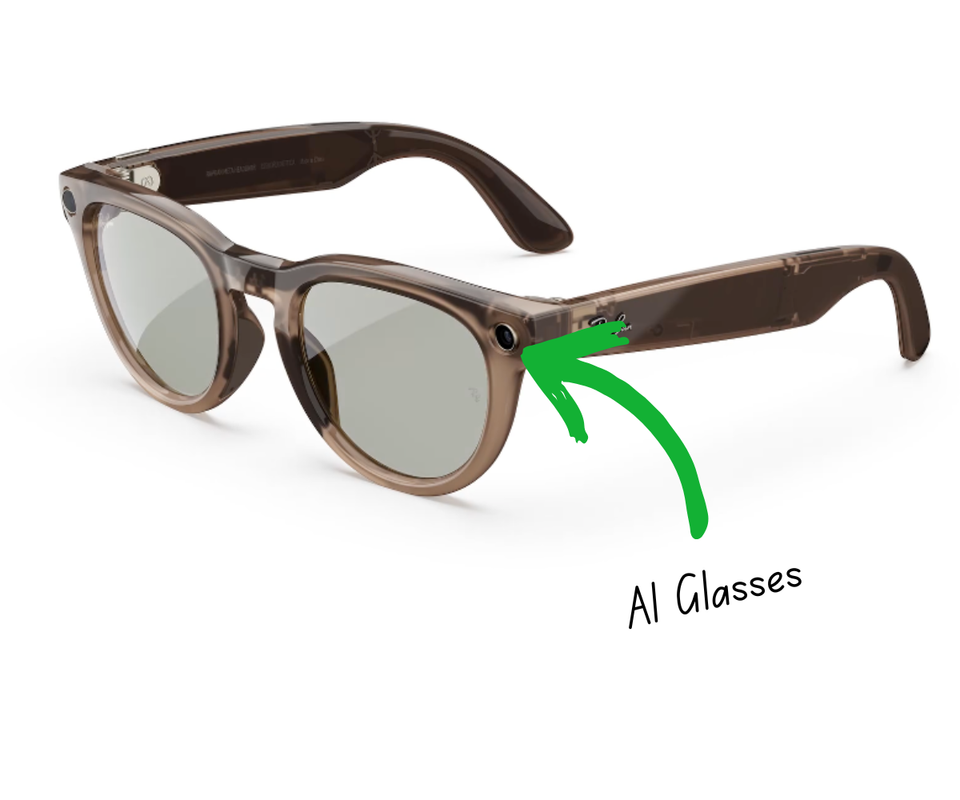
Smart glasses are beginning to change something most of us have taken for granted - usually, we can tell when someone is holding a camera.
Some of the latest AI glasses look much like ordinary eyewear, while also containing cameras, microphones, speakers and an AI assistant.
They can photograph and record what the wearer sees, capture surrounding sound, send messages and, in some cases, use AI to interpret the wearer's surroundings or conversations.
Meta's Ray-Ban AI glasses are currently the most prominent example, although this is a rapidly developing category of technology rather than an issue relating to one company alone.
Children may be photographed, filmed, heard, or included in information being processed by a wearable device belonging to somebody else, potentially without realising that this is happening.
With AI glasses becoming more capable and less visually distinctive from conventional eyewear, parents, schools and organisations working with children need to start thinking about this now.

What can AI glasses do?
Capabilities differ between products, so it is important to check the particular device rather than assuming all AI glasses work in the same way.
Current Meta AI glasses can take hands-free photographs and video, including audio, using a built-in camera. They can make calls and send messages, and Meta AI can respond to questions about the wearer's surroundings.
Some functions allow an ongoing AI conversation informed by what the camera can see, while live translation uses the glasses' built-in microphones to capture speech and provide a translation.
Some supported languages can now work offline once language packs have been downloaded, while others require an internet connection through the Meta AI app. Many models can also be fitted with prescription lenses.
More advanced wearable displays can place information, captions, directions and AI responses within the wearer's field of view. The technology is developing towards AI systems that are increasingly present within someone's ordinary experience of the physical world, rather than something they deliberately open on a separate screen.
The privacy and safeguarding questions therefore extend far beyond whether a child should personally be given a pair.
When a camera no longer looks like a camera
Someone filming with a smartphone normally has to take out a device and position it towards what they want to capture. Smart glasses remove much of this visible behaviour because the camera is already facing in the direction the wearer is looking.

Meta's glasses use a capture light to signal when a photograph or video is being taken, and the company says photo or video capture is blocked if the light is covered. Meta also advises wearers to ask permission before recording people and to avoid recording in sensitive places or situations where there is an expectation of privacy.
Those measures are better than nothing, but do not resolve the wider issue. A recording indicator is useful only if the person being recorded sees it, recognises what it signifies and is in a position to respond. And even then, it may be very unreasonable to place them in the position of having to manage the situation.
Young children cannot be expected to recognise a small light on somebody's glasses, know what that particular device can do, understand the privacy implications and then manage the situation themselves.
The Australian eSafety Commissioner has raised a similar concern in relation to smart glasses and technology-facilitated abuse. Recording indicators can form part of safer design, but they cannot be the only line of defence - in part because this risks shifting responsibility onto the person being recorded.
The responsibility should sit principally with adults, organisations and, most importantly, technology providers. Children need environments in which they can be protected without having to continuously watch for the technology around them.
The issue goes beyond recording
AI-enabled wearable devices introduce another layer to traditional privacy concerns, because their cameras and microphones can also provide information to an AI system.
Meta describes functions through which its AI can describe surroundings, read text, identify objects or continue a conversation using information from the glasses' camera. Live translation similarly relies on speech being captured through built-in microphones.
As these systems become more capable, important questions follow, such as what can the device observe? What information can it derive from what it sees or hears? What information leaves the device? What is stored, for how long and for what purposes? What happens when children who never chose to interact with the system appear within its view?
The Information Commissioner's Office has previously highlighted this wider problem. Its work on emerging immersive technologies warned that increasingly discreet smart glasses could collect information about people nearby with limited transparency and raised questions about how people's information rights would be protected as wearable devices become capable of more unobtrusive monitoring.
More recently, although not specifically addressing smart glasses, the ICO's June 2026 guidance for consumer connected devices reinforced the principle that privacy should be built into products from the outset, with an even higher bar where children may use them.
There is also a wider point here which regulators and technology providers will increasingly need to address - children will likely be affected by connected AI systems even when they are not the intended subject. A child standing in front of somebody else's wearable device may still become part of the information the device records or processes.
There are particular implications for schools
The start of the 2026 school year makes this issue especially timely for many schools, particularly in England.
Department for Education guidance on mobile phones in schools became statutory on 29 June 2026, with schools expected to begin following it from 1 September. It says schools should develop a policy prohibiting mobile phones and other smart technology with similar functionality throughout the school day, specifically including devices capable of sending or receiving notifications or messages, or recording audio or video.
A policy that simply says "no phones" may therefore no longer be enough.
Schools increasingly need to think in terms of what a device can do, rather than what the device happens to look like. A pair of glasses may also be a camera, microphone, messaging device and AI interface.
Separate DfE data-protection guidance currently advises schools to have clear policies governing photographs and video, including expectations for pupils, parents, carers and visitors using personal recording devices on school premises. It also advises schools to future-proof these policies as technologies change and refers specifically to new AI-based tools when considering how images may be taken, processed or shared.
Schools also need clear expectations for places where privacy and safeguarding concerns are especially high, including toilets, changing facilities, medical spaces and residential trips.
Examinations and assessments now need to be considered too. Ofqual has warned that smart glasses and other increasingly discreet devices create new opportunities for technology-enabled cheating. Current Joint Council for Qualifications rules explicitly list smart glasses among the unauthorised devices that candidates must not take into written or on-screen examinations.
Schools should therefore ensure that pupils, parents and invigilators understand that ordinary-looking eyewear may also be a prohibited smart device.
For schools: check your policy now
Schools may wish to check whether existing policies:
- Refer explicitly to smart glasses and other wearable recording technology, rather than phones alone.
- Cover cameras, microphones, livestreaming, messaging and AI functionality.
- Apply appropriately to pupils, staff, parents, contractors and visitors.
- Set clear expectations for school events where families may be taking photographs or video.
- Address areas in which recording devices should never be used.
- Include procedures for suspected covert or inappropriate recording.
- Address examinations and assessments.
- Explain how reasonable adjustments will be made where wearable technology is genuinely required because of disability or another individual need.
Schools should involve their safeguarding and data-protection leads when developing these policies.
A photograph can now be the beginning of another harm
There is a further reason that recording children deserves even greater caution than it once did - an image no longer has to remain simply an image.
Photographs and video can be copied, widely distributed or fed into separate AI systems capable of manipulating them. SAIFCA has consistently raised concerns about AI tools which can sexualise or "nudify" photographs of real children, as well as the wider growth of realistic AI-generated and manipulated imagery.
Smart glasses don't create those technologies, but easier and less conspicuous capture of images may make it easier to obtain source material which can later be misused.
An apparently mundane photograph of a child can therefore have consequences which were much harder to foresee when many of our current social norms around photography developed.
This is one reason SAIFCA has consistently argued for greater caution around publicly accessible and identifiable images of children. Other child-safety bodies are increasingly making similar recommendations. Australia's eSafety Commissioner, for example, has warned schools that ordinary photographs can be used to create harmful AI-generated material and has advised them to reconsider how many images of pupils and staff they make publicly available.
The same principle should inform our approach to wearable cameras.
What does the law currently say?
Laws vary worldwide. In the UK, there is no general restriction on wearing or using camera-enabled smart glasses in public.
The Government was specifically asked about this in Parliament in June 2026 and said it had no current plans to introduce smart-glasses-specific legislation. It pointed to existing offences that may apply where recording forms part of harassment, stalking, voyeurism or other harmful conduct, along with legal protections relating to intimate-image abuse and responsibilities applying to online services once material is uploaded.
Existing offences provide important protections against particular forms of harmful conduct, but they do not create a general requirement to obtain consent before everyday recording in public.
There is therefore a significant difference between something being legally permissible and it being appropriate around children.
Data-protection law also does not provide a complete answer. Purely personal or household use can fall outside parts of UK GDPR, although companies providing the technology and organisations using it remain subject to their own legal responsibilities.
Schools, children's organisations, venues and technology companies still need policies and safeguards which act before serious harm occurs.
What can parents do?
Knowing a few principles can be practically useful.
If someone in the family uses smart glasses, find out exactly what they can record and process, understand the privacy settings and treat other children's privacy with the same care you would want shown towards your own child.
Children can also be taught that cameras may increasingly appear in devices which do not look like cameras, and that they should tell a trusted adult if they think somebody is recording them in a way that makes them uncomfortable or in a place where recording seems inappropriate.
This education can be useful, although it should never become a substitute for adult protection. A six-year-old should not be expected to police the recording technology around them.
Parents and educators are being left to manage risks they did not create. Practical guidance is necessary in the current environment, but it should sit alongside much stronger responsibility and accountability from technology companies.
Parents may also want to check how their child's school, sports club or other regular setting approaches wearable recording devices. If the policy covers phones but says nothing about glasses or other connected wearables, it is reasonable to ask how newer devices are being considered.
Accessibility uses still require strong safeguards
Smart glasses can have genuinely important accessibility applications.
Meta's current devices, for example, can describe surroundings and read text for blind and low-vision users, and can connect users with sighted volunteers through Be My Eyes. Wearable technology may also support people with other accessibility needs.
Reasonable adjustments will sometimes be essential. Good design and policy should accommodate those needs while maintaining strong protections for people who may be observed, recorded or processed by the technology around them.
This is particularly important where those people are children.
As AI moves away from obvious screens and into ordinary objects worn throughout the day, some of the boundaries on which existing safeguarding practices rely are becoming less visible. It should not fall to children to compensate for that change.
Technology companies need to anticipate foreseeable misuse and build effective protections into their products. Schools and children's organisations need policies which reflect what current devices can actually do, and regulators will need to keep pace as the technology develops.
Parents should be aware of the change too, because the next camera around their child may not look much like a camera at all.